
Meditation for beginners: simpler than you think — you don't need
30 June 2026
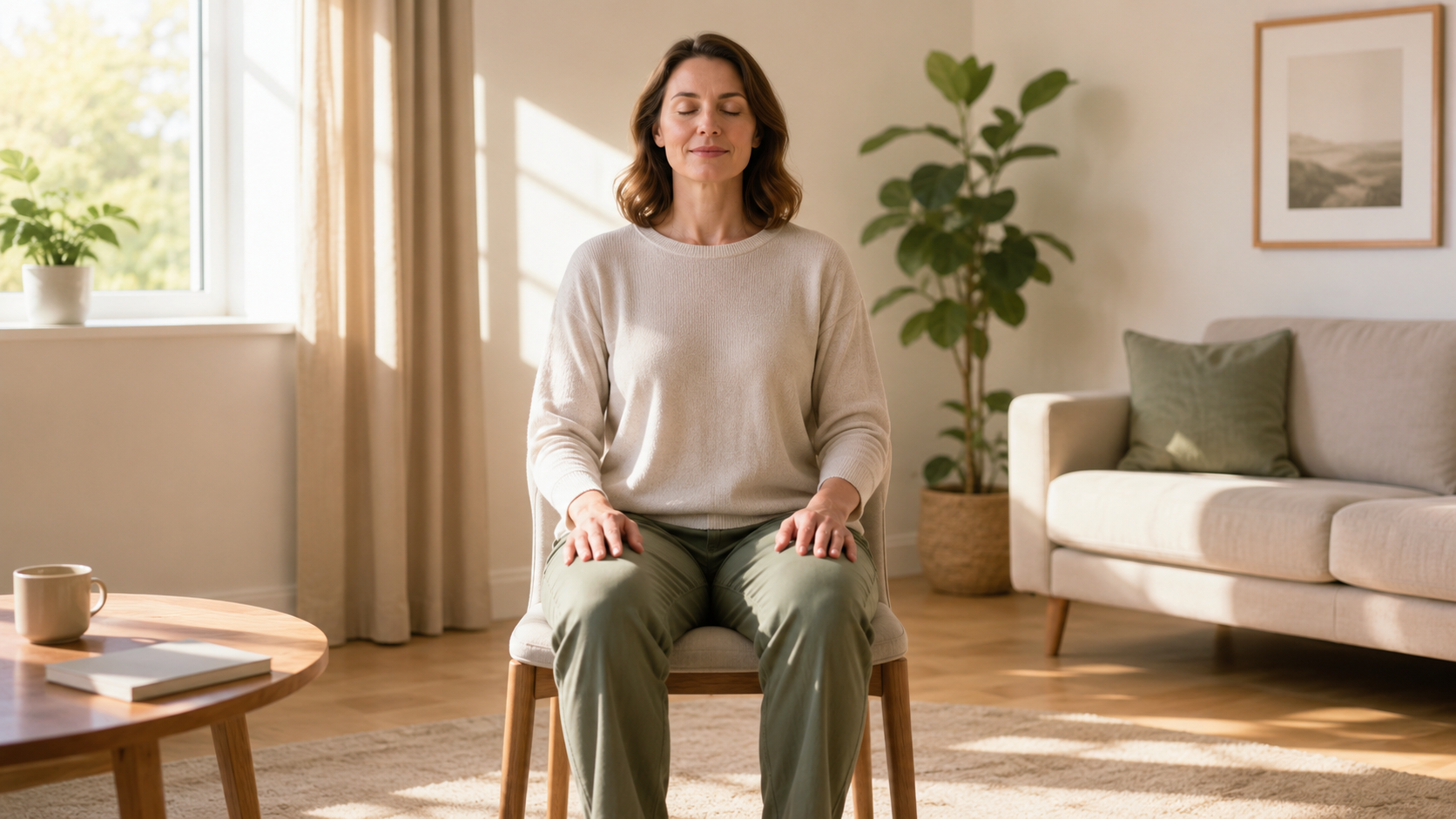
You don't need incense, a mountain retreat, or the flexibility of a yoga instructor. A chair, five minutes, and the willingness to be a little bored at first are enough. That's all.
You don't need incense, a mountain retreat, or the flexibility of a yoga instructor. A chair, five minutes, and the willingness to be a little bored at first are enough. That's all.
What meditation really is
Meditation is attention training. You choose one thing to focus on (usually the breath), the mind wanders (it will, every time), and you gently bring it back. That's one 'repetition.' Noticing and returning is the exercise — not some blissful state of emptiness in the mind.
Research confirms the basics: a regular practice is associated with lower levels of stress and anxiety, better concentration, and more efficient emotion regulation. It's not magic and won't fix everything, but the effect is real and measurable — in some studies comparable to other established relaxation methods.
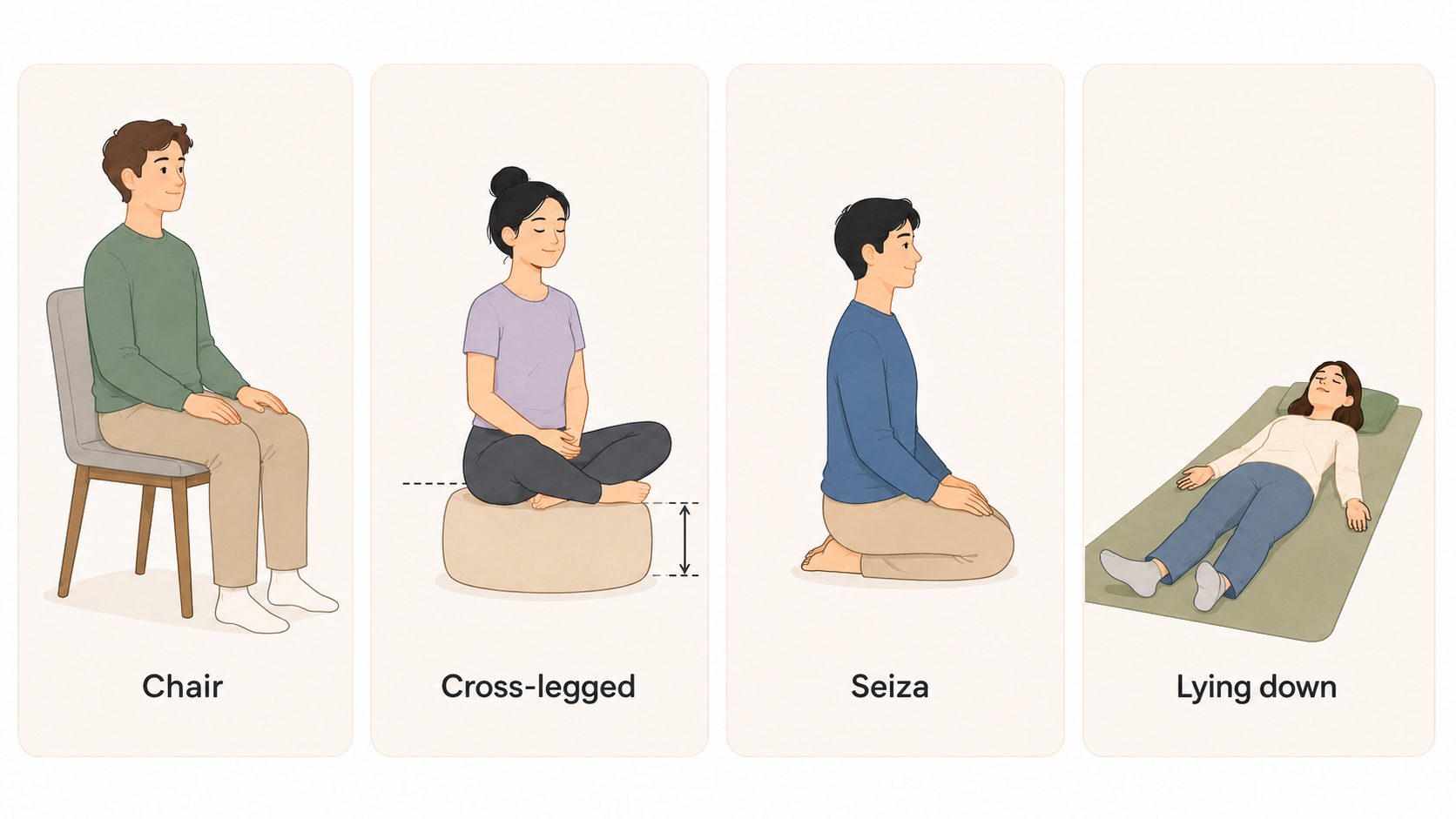
Postures: choose the one that doesn't hurt
The rule is simple: stable, straight, comfortable. Enlightenment doesn't require knee pain.
On a chair — the most underrated option. Feet flat on the floor, back straight but not stiff, hands on your thighs. Ideal for beginners and for the office.
Cross-legged on a cushion — sit on the front edge of a firm cushion so your hips are higher than your knees. The pelvis tilts slightly forward and the spine straightens on its own.
Kneeling (seiza) — kneel with a cushion or bench between your heels and your buttocks. Gentle on the hips, surprisingly comfortable.
Lying down — allowed, but a fair warning: the line between meditation and napping becomes very thin. Best for body scans or when sitting causes pain.
Eyes closed or half-closed with a soft downward gaze — both work. Hands where they can rest.
Three techniques to start
Counting breaths. Breathe naturally. Count each exhale: one, two... up to ten, then start over. Lost count? Great — you've just noticed the mind wandered. Start again from one. It's a classic technique for beginners because it gives the mind a small task to do.
Body scan. Move your attention slowly from the top of the head to the toes, simply noticing sensations — warmth, tingling, pressure, or nothing at all. There's no goal to 'relax' anything; noticing itself is the whole task. Great before sleep.
Sound as an anchor. Instead of the breath, rest your attention on sounds around you — traffic, birds, the hum of a fridge. Don't label or judge them, just listen. Useful in noisy places where sounds would normally distract.
Start with 5 minutes a day. Seriously, five. A short daily practice beats a heroic 40-minute session once a month. Increase the time only when five minutes comes easily.
Common mistakes (everyone makes them)
'I can't stop thinking, so I'm not doing it right.' The most common misunderstanding. The goal isn't zero thoughts — the brain produces thoughts like the heart produces beats. Noticing that you've drifted and returning is a success, not a failure. If you returned 30 times in 10 minutes, you did 30 repetitions.
Forcing the breath. You observe the breath, you don't conduct an orchestra. Let it be shallow, deep, uneven — whatever it is.
Rigid struggle for immobility. Sitting like a frozen statue when your leg goes numb is not discipline. If something really hurts, adjust calmly and continue meditating.
Judging every session. 'Yesterday was deep, today a failure.' Sessions vary and it doesn't matter. A restless session trains the same skill as a calm one — sometimes even more.
Waiting for the right mood. 'I'm too stressed to meditate today' is like 'I'm too hungry to eat.' Stress, fatigue, distraction — these are ideal conditions to practice.
Quitting after a week because nothing 'happened.' Effects accumulate and are mostly visible outside meditation: you explode less often, focus faster, sleep a little better. Give yourself 3–4 weeks before passing judgment.
How to start today
Sit where no one will disturb you.
Set a timer for 5 minutes (so you don't keep checking the clock).
Count your exhales to ten, repeat.
When the mind drifts — and it will — smile inwardly and return to one.
When the timer rings, you're done. Tomorrow at the same time.
That's the whole practice. No apps, subscriptions, or special pants — though a guided meditation app is fine if a guiding voice helps you. The only real requirement is to show up again tomorrow.