Chakras and Meridians under the Scientific Lens: The Ancient Anatomy of Fascia and Nerves
21 June 2026
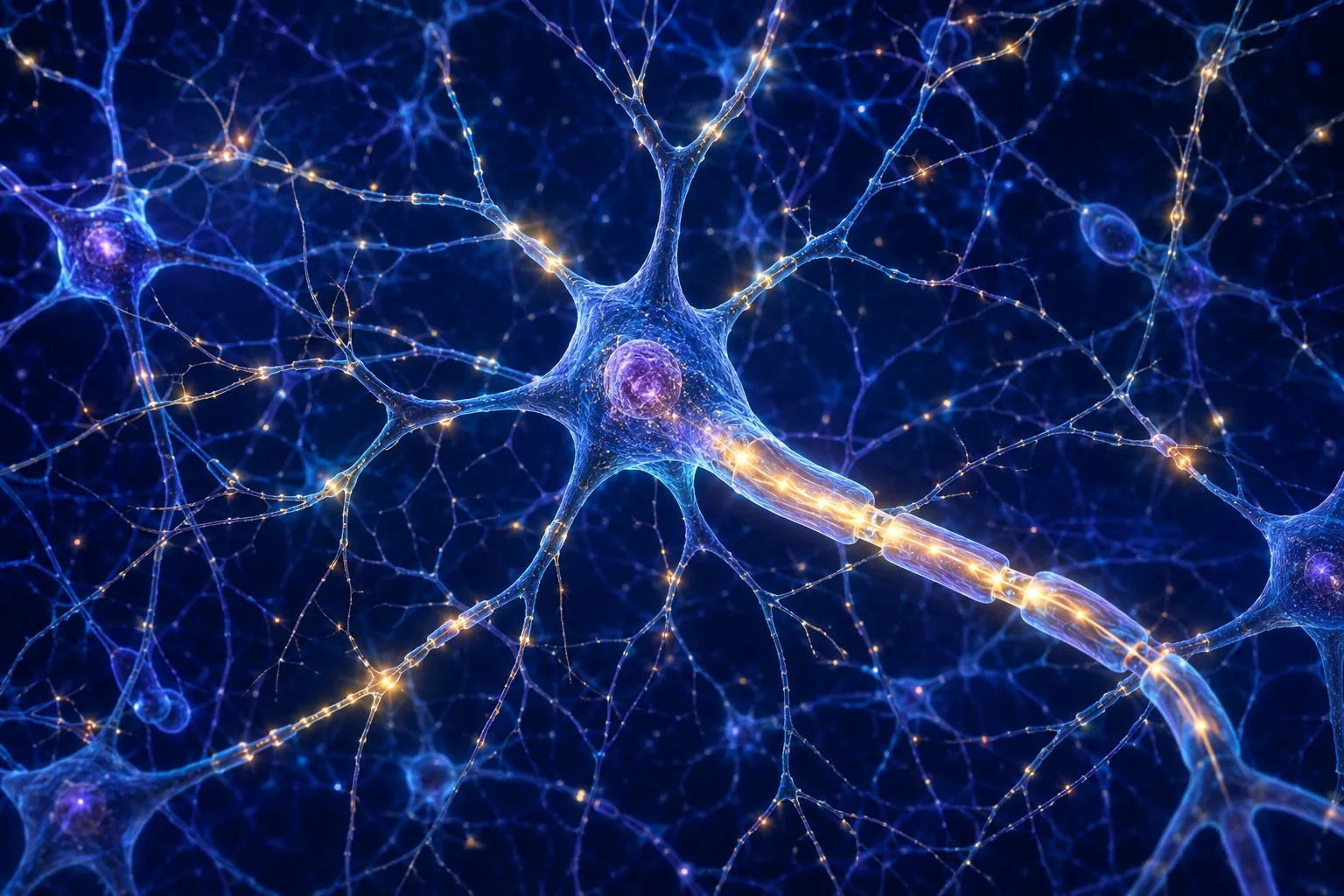
Treated for years as mystical metaphors, chakras and meridians are now gaining rigorous scientific explanations. Researchers link these ancient systems to the fascial network, nerve plexuses, and the newly discovered PVS.
For centuries, Eastern medical and spiritual systems have relied on intricate "energetic" maps of the human body. In India, yogis and sages described chakras (major energy vortices) and thousands of nadi channels, while in China, within Traditional Chinese Medicine (TCM), the system of meridians—pathways through which the life-giving force Qi was said to flow—was meticulously studied. Western allopathic medicine, armed with scalpels and microscopes, rejected these concepts for decades as unscientific metaphors or outright quackery. Today, however, thanks to the development of advanced imaging techniques and a deeper understanding of neuroanatomy, the microscope and esotericism are finally meeting.
Meridians and Fascia: More Than Just Connective Tissue
The biggest breakthrough in research on acupuncture and meridians came from an unexpected direction: fascia research. For years, anatomists treated fascia merely as a kind of "packing wrap" around muscles and organs, which was simply cut away and discarded during autopsies. Only recently have researchers (such as experts from the Fascia Research Group at Ulm University) realized that this three-dimensional, uninterrupted web of connective tissue enveloping our entire body is one of the most important organs of sensation and communication.
Modern research (e.g., by Dr. Helene Langevin) has proven that acupuncture points overlap by nearly 80% with the intersections of fascial planes. Fascia conducts mechanical stimuli and so-called piezoelectric signals much faster than the nervous system. The insertion of an acupuncture needle or applied pressure (acupressure) mechanically winds and pulls the collagen fibers of the fascia, triggering a wave of cellular communication and reducing inflammation in distant parts of the body. What the ancient Chinese called the flow of Qi, modern biomechanics calls mechanotransduction in the extracellular matrix.
The PVS (Primo Vascular System): Anatomical Proof of Meridians?
An even more fascinating trail is the research on the Primo Vascular System (PVS). It was discovered in the 1960s by a North Korean scientist, Dr. Bong-Han Kim, but his work was ignored by the Western world for years. It wasn't until the 21st century that a team of South Korean scientists from Seoul National University (led by Prof. Kwang-Sup Soh) reaffirmed these discoveries using modern fluorescent dyes and electron microscopy.
It turned out that inside the fascia, blood vessels, and lymphatic system, there is another, completely distinct system of microscopic channels (Bonghan ducts) filled with fluid rich in hyaluronic acid, free immune cells, and DNA. Most importantly, the spatial arrangement of this extremely thin network of vessels uncannily resembles classical meridian maps. Much evidence suggests that the PVS plays a crucial role in tissue regeneration and the transmission of biophotons, potentially being the physical carrier of meridians sought for centuries.
Chakras as Nerve Plexuses and Endocrine Glands
While meridians find their explanation in the fascia, the concept of chakras from the yogic tradition becomes understandable on the grounds of Western neuroanatomy. According to Ayurvedic texts, there are seven main chakras aligned along the spine. Numerous medical anatomical analyses today prove that their exact location coincides with relay stations of the autonomic nervous system (the largest nerve plexuses) and the main glands of the endocrine system:
Root Chakra (Muladhara): Corresponds to the inferior hypogastric plexus and the sciatic nerves, managing survival and basic excretory functions.
Solar Plexus Chakra (Manipura): Perfectly overlaps with the anatomical celiac (solar) plexus and adrenal glands, which are responsible for the production of cortisol and adrenaline—hormones responsible for our willpower, digestion, and stress response.
Heart Chakra (Anahata): Located exactly at the site of the cardiac plexus and the thymus gland (crucial for the body's immunity).
Third Eye Chakra (Ajna): Strongly connected to the action of the pineal gland, pituitary gland, and hypothalamus. These glands act as "conductors" in the brain, regulating sleep cycles (melatonin) and our general perception of reality.
When ancient yogis described the process of meditation in which they "unblocked chakras," from a physiological point of view, they were most likely performing a powerful regulation of the brainstem and the vagus nerve. Conscious breathing and focused attention allowed them to balance the autonomic nervous system in the region of a specific plexus, switching the body from "fight or flight" mode to "rest and digest" mode.
Science Learns the Language of Mystics
Modern psychoneuroimmunology and integrative medicine are slowly ceasing to view meridians and chakras as paranormal phenomena. Instead, they recognize them as brilliant functional models of our bioelectrical and neuro-fascial functioning, developed through thousands of years of deep introspection. It is a fascinating reminder that ancient sages, without the aid of MRI machines or microscopes, managed to map the network of the human body from the inside out with incredible precision. Today's science is simply beginning to catch up slowly, learning to name the same processes in its own language.
Sources and Further Reading:
Langevin, H. M., & Yandow, J. A. (2002). "Relationship of acupuncture points and meridians to connective tissue planes". The Anatomical Record.
Soh, K. S. (2009). "Bonghan circulatory system as an extension of acupuncture meridians". Journal of Acupuncture and Meridian Studies.
Fascia Research Society (fasciaresearchsociety.org) - publications on mechanotransduction.
Wisneski, L. A., & Anderson, L. (2009). "The Scientific Basis of Integrative Medicine". CRC Press.