
Rapé (Hapé): A Beginner’s Guide to Amazonian Snuff, Meditation and Effects

What rapé (hapé) is, how it is traditionally connected with meditation, how it is administered, and what effects to expect — including important information about nicotine and safety.
What is Rapé (Hapé)?
Rapé, also written Hapé or Rapee, is a traditional South American snuff used by a number of Indigenous Amazonian communities.
There is no single universal recipe. Many preparations contain finely powdered Nicotiana rustica tobacco, often mixed with alkaline plant ash. Depending on the tradition, other botanical ingredients may also be included.
As a result, different blends can vary considerably in strength, aroma and perceived effects.
Rapé and meditation
In traditional ceremonial settings, Rapé may be used before meditation, prayer, singing or other practices involving focused attention.
People commonly describe the experience as:
• grounding,
• helping to focus attention,
• quieting mental chatter,
• supporting a feeling of being present in the moment,
• helping prepare for meditation or ceremony.
However, there is not sufficient scientific evidence to consider Rapé a proven treatment for stress, anxiety or attention problems. It is also not a necessary part of meditation.
How is Rapé administered?
Rapé is used through the nose as a very fine powder. Traditionally, it is not smoked or consumed as food.
Two main types of applicators are commonly associated with the practice:
• Tepi — a longer applicator used by another person. One person blows the Rapé through the tube into the nostril of the recipient.
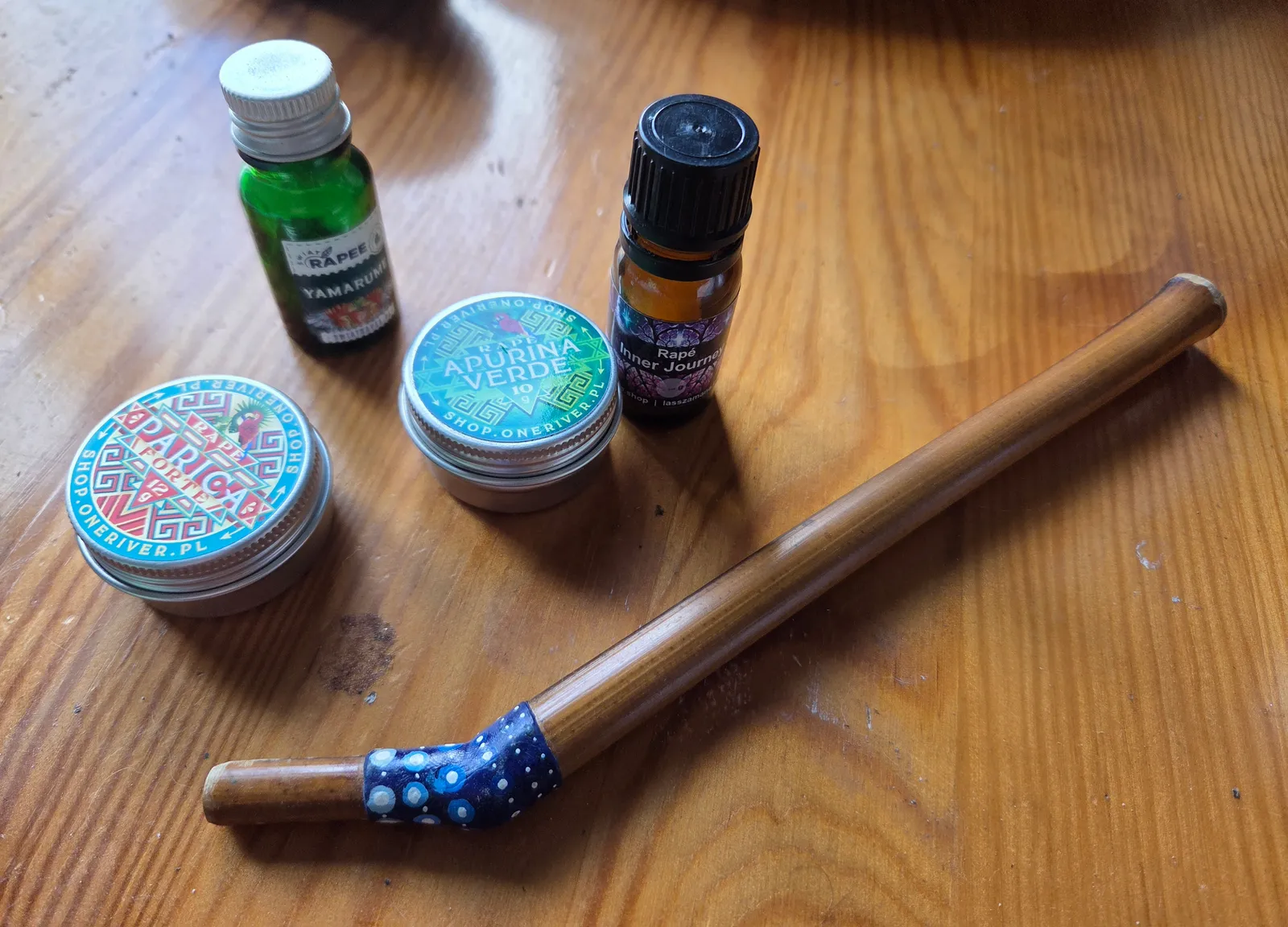
• Kuripe — a smaller applicator designed for self-administration, connecting the user's mouth with the nostril.
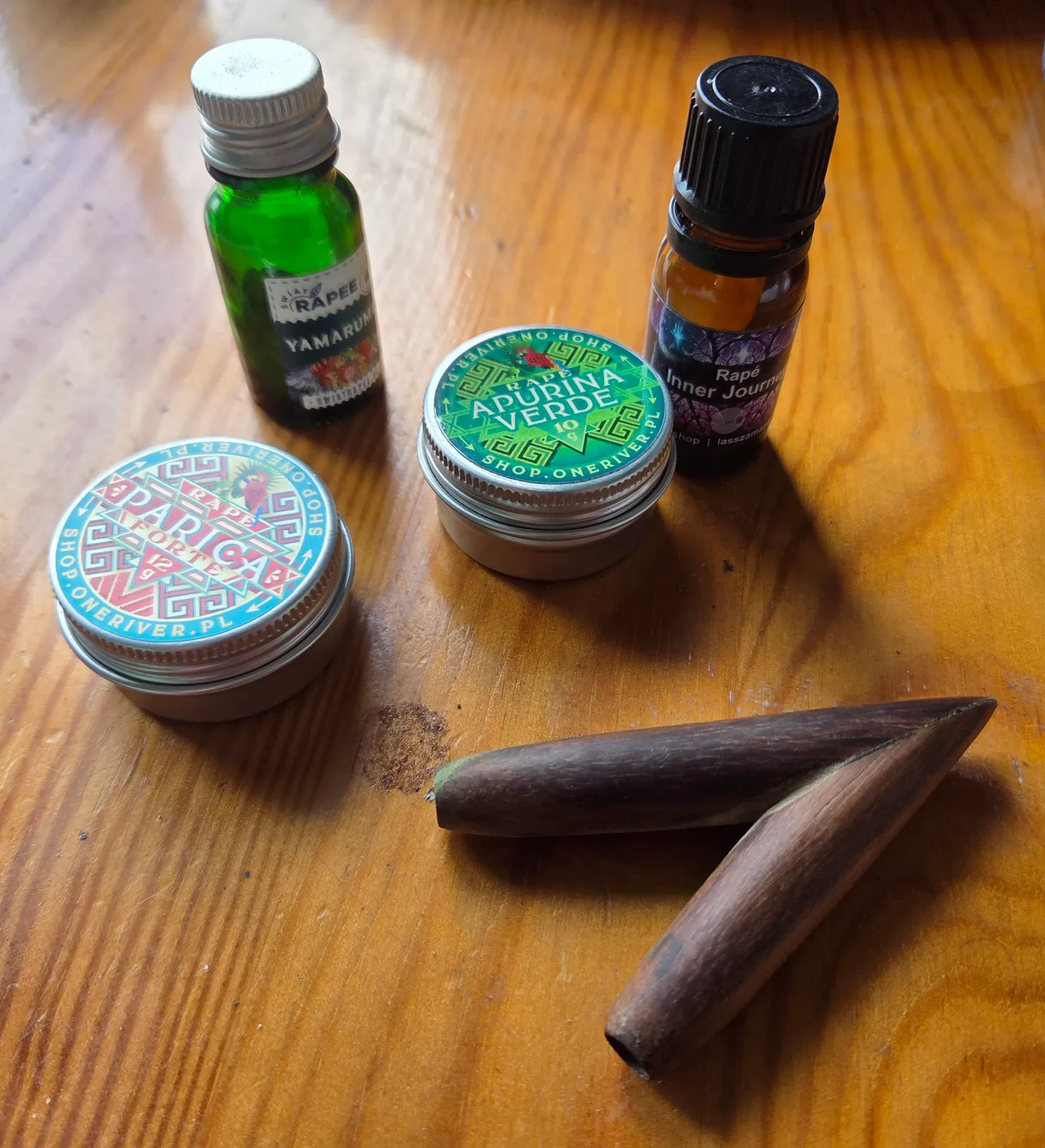
In traditional settings, the way Rapé is administered may form part of a ceremony and can carry symbolic meaning connected with intention, concentration and the relationship between participants.
What effects can you experience?
A first experience can feel intense. Reactions vary depending on the ingredients, strength of the preparation and individual sensitivity.
Possible short-term effects include:
• a strong sensation or burning in the nose,
• watering eyes,
• sneezing,
• increased saliva,
• dizziness,
• nausea,
• sweating,
• sometimes vomiting.
After the initial intensity, some people report:
• greater calm,
• a feeling of mental clarity,
• improved concentration,
• relaxation,
• deeper attention to breathing or meditation.
Rapé is not usually classified as a psychedelic and generally does not produce the perceptual changes associated with classical psychedelics.
Important safety information
Many traditional Rapé preparations contain Nicotiana rustica, a tobacco species that can contain high levels of nicotine.
It is important to remember that:
• nicotine can cause dependence,
• it can affect heart rate and blood pressure,
• Rapé may irritate the nasal mucosa,
• the composition and strength of individual blends can vary significantly,
• a product being natural does not mean that it is risk-free.
People with cardiovascular conditions, pregnant individuals and people with significant respiratory or nasal problems should be particularly cautious.
Rapé should not be considered a substitute for professional medical or psychological care.
Where can you learn more?
The Unmeshia directory includes shops connected with Amazonian traditions and accessories such as Tepi and Kuripe.
• One River — Warsaw
https://unmeshia.com/shops/one-river
• Las Szamana — Wrocław
https://unmeshia.com/shops/las-szamana
These are informational shop profiles listed in the Unmeshia directory. Unmeshia does not sell the products, and information concerning ingredients, availability and sales remains the responsibility of the individual shops.
For beginners, the most important principle is an informed approach. Learn what is contained in a particular preparation, where it comes from and the cultural context surrounding the practice. Rapé can form part of a traditional ceremony, but it should not be treated as a guaranteed shortcut to deeper meditation. Meditation itself does not require any substance.