
How to choose a retreat and avoid getting ripped off
28 June 2026
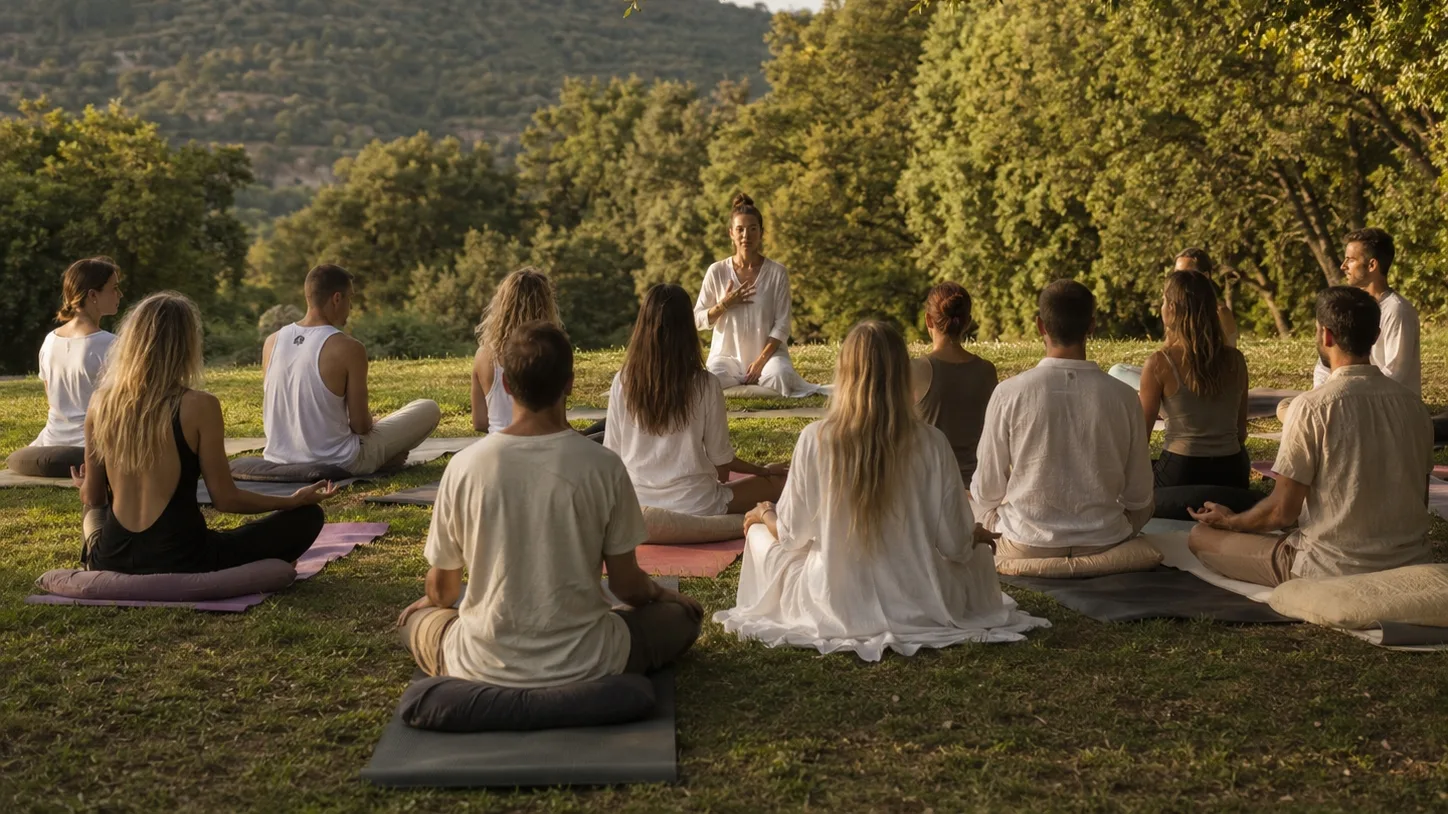
The market for personal-development retreats in Poland is booming — and that's great. But where the market flourishes, marketing flourishes too, and sometimes plain scams. This guide will help you choose a retreat that you'll return from feeling recharged, not just a few thousand PLN lighter.
What a retreat is (and what it is not)
A retreat is a trip with a structured program of practice — yoga, meditation, breathwork, workshop-style work — usually in nature, with accommodation and meals. The key word is program: a retreat differs from a spa vacation in that someone competent guides you through a planned process.
What a retreat is not: a miraculous life reset in three days, therapy (though it can be therapeutic), or a guarantee of transformation. A good retreat provides space, tools and calm — you'll still be the one doing the work. That's good news: it means you bring the results home with you.
Types of retreats — what to choose to start with
Weekend yoga and meditation retreat — 2–3 days, typically in Poland. Best first choice: low cost, small time investment, easy to assess whether this format suits you at all.
Themed retreat — breathwork, yoga nidra, voice and sound work, intuitive dance. Sensible when you already know which practice draws you.
Retreat in silence (silent retreat / vipassana) — several to a dozen days without talking, phone or reading. A deep experience but demanding; honest organizers themselves advise against it for complete beginners.
International retreat (week+) — Crete, Bali, Portugal. Beautiful, but more expensive and harder to verify from Poland. Leave for the second or third time, once you know what you're looking for.
Digital detox — places without signal, forest, eco cabins. Less formal practice, more disconnection from stimuli. Great for overstimulated people who don't yet want a "spiritual" program.
How to check the organizer — a concrete checklist
1. Hour-by-hour program. Ask for the daily schedule. "Yoga, meditation, free time" is not a program, it's a table of contents. A good organizer sends the plan without hesitation.
2. Who leads and what qualifications they have. Name, surname, education, years of practice — to verify online. For yoga, standard are teacher training certificates (e.g., 200/500 hours); for work with trauma or "deep transformation" ask about psychological or therapeutic preparation. Lack of the leader's name in the offer is a red flag in itself.
3. Group size. Ask directly about the limit of places. No limit = expect a crowd and zero individual attention. For practice involving adjustments, a reasonable ratio is around a dozen people per teacher.
4. What's included in the price. Accommodation, how many meals, how many sessions per day. Classic hidden costs: surcharges for single rooms, massages, "individual consultations", SPA area, travel. Ask for the final price in writing.
5. Cancellation terms. A non-refundable deposit is standard, but check what happens if the organizer cancels and whether there's the option to move the date. No terms = no trip.
6. Independent reviews. Look for reviews outside the organizer's site: Google, themed groups, friends from the community. One question in a group can save you a few thousand PLN.
7. Conversation before signing up. A good organizer is happy to talk by phone and will ask about your experience, health, expectations. If the only contact is a payment form — that says it all.
Red flags — when to walk away
Promises of transformation in a single weekend. "Awakening", "trauma release", "consciousness transformation" guaranteed in 48 hours — the bigger the promise, the less credible it is. True practice speaks the language of process, not miracles.
Pressure of time and extra charges. "Only 2 spots left, price increases at midnight" used aggressively is a sales technique, not care for your development.
Cult of the leader. If the materials celebrate a charismatic figure more than they describe the program, and critical questions are dismissed — be careful. A good teacher invites questions and respects boundaries; anyone who claims that crossing them is "part of the process" disqualifies themselves.
Encouraging you to stop medication or therapy. Immediate disqualification, no exceptions.
"Plant medicine" without clear frameworks. Retreats involving psychoactive substances are a separate legal and health-risky topic — in Poland these substances are illegal, and complications are real. If the offer mentions this obliquely, that's not a yoga retreat.
Lack of company details. Business name, NIP, company bank account, invoice on request. A transfer "to a private person, because it's more convenient" — thanks, goodbye.
How much it costs — approximate
A weekend in Poland usually costs from a few hundred up to around PLN 1500 with accommodation and meals; week-long international retreats start around PLN 2500–4000 plus travel. A price above these brackets isn't bad in itself — but then ask what exactly you're paying for: smaller group? renowned leader? higher standard? "Exclusive energy of the place" is not a line item on an invoice.
Rule of thumb: you pay for the program and the leader's competence, not for the words "holistic" and "transformation" in the description.
Quick checklist before paying a deposit
I have the daily schedule in writing.
I know the name and qualifications of the leader — and I've verified them.
I know the group limit.
I know the final price and list of surcharges.
I've read the cancellation terms.
I've found reviews outside the organizer's site.
I've spoken with the organizer (phone/video).
No one is rushing me and no one is promising miracles.
Eight "yes"? Go and turn off your phone. That's exactly why you're going.